

Over the past several years contentiousness in the dating pool has been festering. Social media has shown us the worst of women and the worst of men. This has altered public perception of the opposite sex and ultimately damaged the atmosphere between men and women.
Recently, women on social media have been expressing their anger over the 2024 U.S. Presidential Election results by swearing off dating and a new commitment to “de-center” men. These women claim that sex and relationships are no longer safe.
As a result, both men and women are swearing off dating altogether in movements such as Korea’s 4B movement and “men going their own way” (MGTOW).
What is “De-Centering?”
De-centering is the act of removing men and relationships as a priority in your life. This is often followed by vows to withhold sex, marriage, and childbearing.
Many of the bandwagoners partaking in this trend intentionally make themselves unattractive so as to “ward off” the men. Some have even made dramatic shows of shaving their heads.
“De-centering” men is a commitment to “subvert and unlearn patriarchal norms,” according to a prominent advocate of the movement, Charlie Taylor. In essence, de-centering is women’s attempt to fight against “the patriarchy” by withholding all intimacy and romantic relationships.
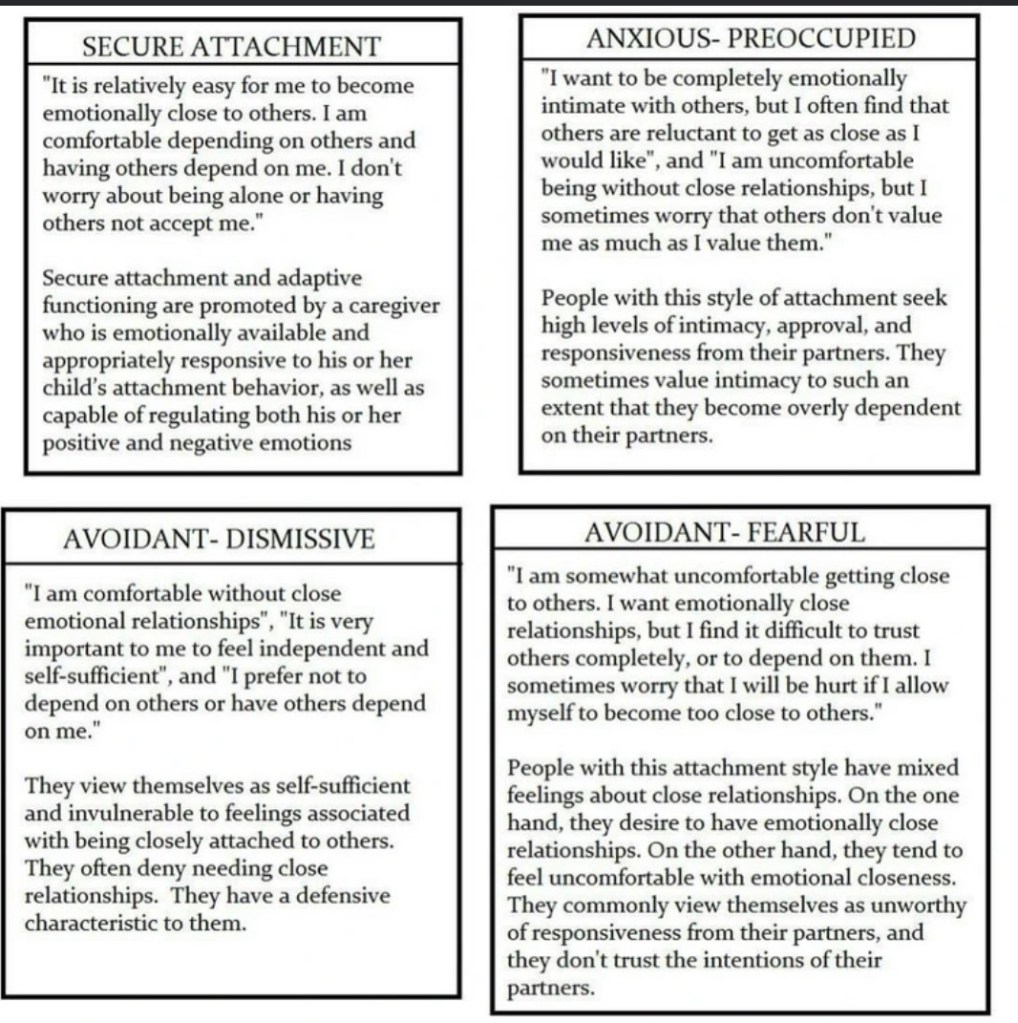
Attachment Styles
Attachment styles are patterns of behavior that stem from early childhood experiences or traumas. These attachment styles are used to describe a persons level of comfort with closeness and intimacy in relationships.
To anyone who is familiar with psychology and attachment styles, the de-centering men movement is a clear example of the dismissive attachment style.
Characteristics of the dismissive attachment style are the tendency to avoid emotional closeness, prioritize independence, extreme self-sufficiency, and suppressing emotions.
The de-centering men movement advocates show all the signs of a dismissive attachment style. Observe dismissive attachment style talking points in the chart below and notice how similar it is to de-centering men rhetoric.
Healing Dismissive Attachment Style
If you are an advocate of the de-centering men movement and notice signs of the dismissive attachment style in yourself, there is hope.
There are several ways to work through a dismissive attachment style. Some ways include self-reflection, developing tools for healthy communication, setting boundaries, and working with a trained professional to understand the root cause behind your attachment style.
Additionally, there are many free or affordable online resources to help you heal your attachment style. Attached is a worksheet on healing dismissive attachment styles.
Romantic Relationships: A Worthwhile Pursuit
Intimacy is dangerous on several levels. Firstly, sexual intimacy comes with the risk of STDs, unwanted pregnancies, and vulnerability with your body. Secondly, emotional intimacy requires vulnerability, trust, and authenticity. All three of these characteristics of emotional intimacy are hard to foster in casual relationships.
While intimacy and romantic relationships are a risk, they can be a calculated risk.
If you are tempted to partake in the de-centering men movement or recognize a dismissive attachment style in yourself, pause. I understand the vulnerability that comes with intimacy and relationships. This is why you should make decisions about relationships, to have or not to have, when you are in your most healed state. Do the inner work required to find a good partner, and be a good partner.
Marriage is one of the best avenues for increasing satisfaction and well-being. A healthy marriage provides endless joy, satisfaction, and happy memories. Yes, happy marriages aren’t normalized in our society, but they exist and they are a worthwhile pursuit.
Conclusion
If you’ve been hurt by a person, whether a parent in early childhood or a partner in an adult relationship, I understand. However, do not allow these people, who have already taken safety, comfort, and joy from you, to continue robbing you.
Do the inner-work to heal yourself, to reclaim your joy and sense of security, and reap the benefits of a happy lifelong companionship.

 FEMOSPHERE
Leave a comment